



Call 0800 1111
Mental health issues
Your mental health is always important. And anyone can be affected by mental health issues. Whatever you’re going through, there are ways to get support.
This page is also available in Welsh.
What is mental health?
Mental health is all about:
- how you feel about yourself
- how you're feeling
- how much you believe you can overcome challenges in your life
- whether you feel able to interact with other people.
Everyone has times when they feel better or worse. Sometimes you might feel positive or full of confidence, other times you could be stressed or anxious.
If your thoughts and feelings never change or they start to negatively affect you, then that could be a sign of a mental health condition. Whatever’s happening, visiting your doctor can help you to get the right advice, support and a diagnosis if you need one.
This page is also available in Welsh.
5 facts about mental health:
- 1 in 4 people will struggle with their mental health at some point
- People can experience mental health issues at any age
- Coronavirus has made mental health more difficult for lots of young people
- There are lots of ways to cope and get support with your mental health
- Childline is here for you if you’re struggling with your mental health
Getting help with mental health
If you’re worried about your mental health, then you’re not alone. There are lots of ways to cope, or get advice and support:
- Talk about it
Sharing what’s happening can help you to feel less alone and make things more manageable. Remember, you don’t have to share everything if you’re not ready - Visit your doctor
Your doctor can give you advice and support about what’s happening and can help you get a diagnosis if you need one. We’ve got lots of advice on talking to your doctor. - Build a healthy routine
Making sure you’re eating healthily, exercising and getting enough sleep can help your mental health, but it’s not always easy. We’ve got advice to get you started. - Express how you’re feeling
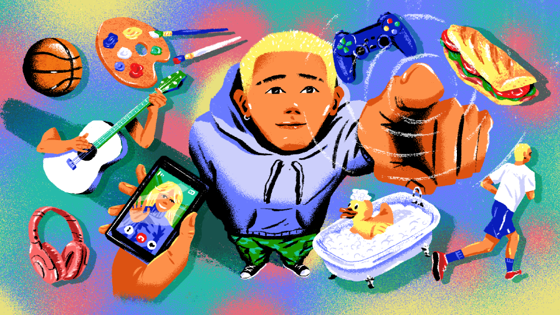
There are lots of ways to express yourself that can help you to feel better, whether it’s through talking, art, writing or anything else. Everybody’s different. - Try something new
Trying something new can help build your self-esteem and make you feel more confident, and it can show that things can change. Not sure what to try? We’ve got ideas to help.
Feeling like you want to hurt yourself
If you’re feeling suicidal, want to self-harm or you’re worried about your safety, it’s important to get support as soon as possible.
There are lots of ways to get support:
- tell an adult you trust what’s happening
- contact your crisis team if you have one
- call 999 to ask for an ambulance
- visit your local A&E to get support
- call us for free on 0800 1111

trying to make
sense
of this
Types of mental health issues
Anorexia, bulimia and other eating disorders
People with anorexia try to reduce their calorie intake. They might also try to lose weight to work off any food they have eaten. Anorexia leaves people feeling they look fat, even if they're very thin.
People with bulimia binge (eat lots of food at once) and then get rid of the food (usually by making themselves sick).
Both conditions leave people worrying about their weight or body shape. They will also be anxious about gaining any weight.
There are lots of different types of eating disorders, and we’ve got information and advice to help.
Anxiety and panic attacks
Anxiety is an uncomfortable tense feeling that can make you feel tired, upset, worried, shaky or light-headed. Lots of people feel anxious from time to time, but for some people it can make them struggle to live their daily life.
A panic attack is when you get a sudden rush of fear and feel less in control. Panic attacks a can make your heart beat really fast, give you shortness of breath and can make you feel faint. A panic attack can be scary but it won’t physically hurt you.
Bipolar disorder
Bipolar disorder is a mental health condition which leads to somebody changing from being really hyper (or manic) to feeling very low and depressed. You could feel extremely happy or extremely down for days or even weeks.
We’ve got information and advice to help if you’re worried about bipolar disorder.
Borderline personality disorder
A personality disorder is a mental health condition that makes it hard to manage thoughts about how you see yourself, and how you deal with or act in relationships with others.
Borderline Personality Disorder (BPD) is one of the most common personality disorders. It affects your mood and how you communicate with other people. It has a lot of different symptoms, and lots of people without BPD might have some of those symptoms. Whether someone has all of these symptoms or just a few of them, there are ways to cope.
Living with Borderline Personality Disorder
Whether you’ve been diagnosed with Borderline Personality Disorder or you think you might have it, there are things you can do to cope:
- Focus on something you enjoy. This can help distract you from difficult feelings.
- Find somewhere you feel calm. If you’re struggling to manage your feelings, taking some time to relax can make a big difference
- Make a plan for when things get too much. It could be having somewhere to go, someone to talk to or doing something that calms you down.
- Talk to other people or to a Childline counsellor. This can help make sense of confusing feelings you may be having.
Only a doctor or mental health professional can diagnose Borderline Personality Disorder. If you’re worried about seeing a doctor, you could practise with a Childline counsellor what you might want to say.
Depression
It’s natural to feel sad or down sometimes. But if your sad thoughts and feelings are stopping you from enjoying things in your life that you used to, or you feel that life isn’t worth living, it’s important to speak to a doctor.
When someone talks about feeling depressed they might mean lots of different things. Some people might say it when they’re feeling down or sad, other people will have a diagnosis of depression.
People might be depressed after something happens, like someone close to you dying. Sometimes it’s hard to see any reason why you’re depressed.
Speaking to someone about how you feel is the first step in getting help with depression. You could ask an adult you trust for help or see your doctor.
Obsessive Compulsive Disorder (OCD)
OCD is a mental health condition that makes someone think about things over and over and repeat an action or behaviour again and again. This can cause a lot of anxiety.
OCD can affect people in lots of different ways, and can have a big impact on your life. Someone with OCD has:
- Obsessive thoughts – Thoughts or images that keep coming up for you, making you feel bad or anxious
- Compulsive behaviours – Things you feel like you have to do to stop yourself from feeling bad
For example, someone with OCD might be worried leaving a door unlocked. Because they’re worried, they’ll lock and unlock their front door over and over again, even though they’re already running late.
If you’re worried about OCD, or it’s having an impact on your life then it’s important to get support. You can speak to your doctor, or visit YoungMinds to find out more about it.
Psychosis and hearing voices
Psychosis is a mental health condition that causes people to have very different experiences of reality from other people.
Someone with psychosis might:
- hear, see or sense things which other people don’t
- have jumbled or paranoid thoughts, including worries about what other people may be thinking about them
- experience muddled speech
Lots of people might have these symptoms but not suffer from a form of psychosis.
Hearing, seeing or sensing things that other people don’t doesn’t necessarily mean you have psychosis or a disorder like schizophrenia. Talking to yourself or listening to your thoughts is different to hearing voices which are out of your control. Most young people who hear voices don’t have these conditions as the symptoms can be triggered by lots of different things.
Only a doctor or mental health professional can diagnose a psychotic disorder.
Living with psychosis
Whether you've been diagnosed with psychosis or not, there are some things you can do now to help manage the symptoms.
- Visit your doctor. If you’re worried about forgetting what you want to say, why not visit Docready to make a checklist before you go?
- Keep a diary. You can write about things that make your feelings worse, and think about how to cope if it happens again in the future.
- Create a plan for when you’re feeling unwell. Include things to help others notice when you’re struggling and what support you might need.
Post-traumatic stress disorder (PTSD)
It's normal to have experiences that are difficult to cope with. When someone feels like their life is in danger this can be traumatic and make it hard to cope in the future.
Not everyone who has a traumatic experience will get PTSD. And you might struggle to cope but not have it. PTSD can make someone:
- have flashbacks, problems sleeping and nightmares
- become depressed
- struggle to cope or experience other mental health issues.
There are ways to cope and get help when you’ve experienced trauma. If you think you might have PTSD, it's important to visit a doctor for support.
Find out more about PTSD and flashbacks.
Schizophrenia
Schizophrenia is a mental health condition where someone may find it hard to tell what’s real and what’s not.
Schizophrenia is a type of psychosis, so someone with schizophrenia might:
- hear or see things that other people don’t (hallucinations)
- have muddled or confusing thoughts (delusions)
- feel paranoid, or think people are against them or trying to hurt them.
Lots of people might have these symptoms but not suffer from psychosis or schizophrenia. Only a doctor or mental health professional can diagnose the condition.
Visit the YoungMinds website for more information on schizophrenia.

Opening up about mental health problems
Helping someone else
It shows a lot of trust if someone shares how they’re feeling or that they’ve got a mental health issue. But it can also be difficult to know what to do.
No matter what’s happening, there are small things you can do to help someone you care about:
- Listen to them
Being listened to can really help. It can make someone feel less alone and more able to cope, even if you don’t have all the answers. - Help them get support
Encourage them to speak to their doctor, an adult they trust or to Childline. - Spend time together
Having a mental health issue doesn’t stop them being your friend, doing things you both enjoy when they’re ready can help to take your friend’s mind off things that are happening. - Take care of yourself
It can be tough supporting other people, but you’re not alone either. Remember that you can talk to us about anything.

Get More support




This site is protected by reCAPTCHA and the Google Privacy Policy and Terms of Service apply.