

feeling like
I don't
belong

Call 0800 1111
Child refugees and asylum seekers
A refugee is someone who has been given the right to stay in the UK because they're unsafe in their home country. If you're a child refugee or asylum seeker or, if you know someone who could be, we can help.
Being a child refugee
There are lots of different reasons why people leave the country where they were born or grew up, including:
- joining family abroad
- escaping war or violence
- finding safety
- coming to study or work
- being able to look after their children.
Who are refugees and asylum seekers?
Asylum seekers are people who come to the UK because they are unsafe in their home country.
Refugees are people who have had their asylum claims accepted by the UK government. They have the right to stay in the UK for up to 5 years. After that they can apply to stay in the UK indefinitely.
You have the right to
- feel safe at home and outside
- continue your education, including going to school or college
- have your views heard
- get support with your basic needs, like having somewhere to live, food and clothing.
3 facts about refugees
- Refugees make up just 0.18% of the UK population.
- More than half of the world's refugees are from Syria, Afghanistan and South Sudan.
- Famous refugees include Rita Ora, Bob Marley and Albert Einstein.
Applying for asylum
Applying for asylum can be a long process and it's normal to go to lots of meetings.
You'll usually go to these with your family. If you're applying on your own and you're under 18, you may be asked to go with your social worker or another responsible adult.
If you don't understand anything, remember it's always okay to ask questions. You can also ask for an interpreter to help you communicate at the meetings.
Organisations such as the British Red Cross provide support for young refugees.
We can help you contact your local Children's Services and find a social worker.
If you're a child refugee or asylum seeker applying for asylum in the UK can be a hard process. But no matter what's happening we're here for you and can help you find ways to cope and feel better.
Things you can try:
- talking about your feelings. This can help you to feel more confident
- taking a break by going outside for a walk or jog
- asking your parents or carers when you need something
- joining after school clubs and activities to make friends.
Where to get help
- Childline
- Emergency services - call 999 for the police, fire or an ambulance
- 111 - for non-urgent medical advice
- Refugee Council - asylum advice
- LawStuff - information about your rights
I wish for...
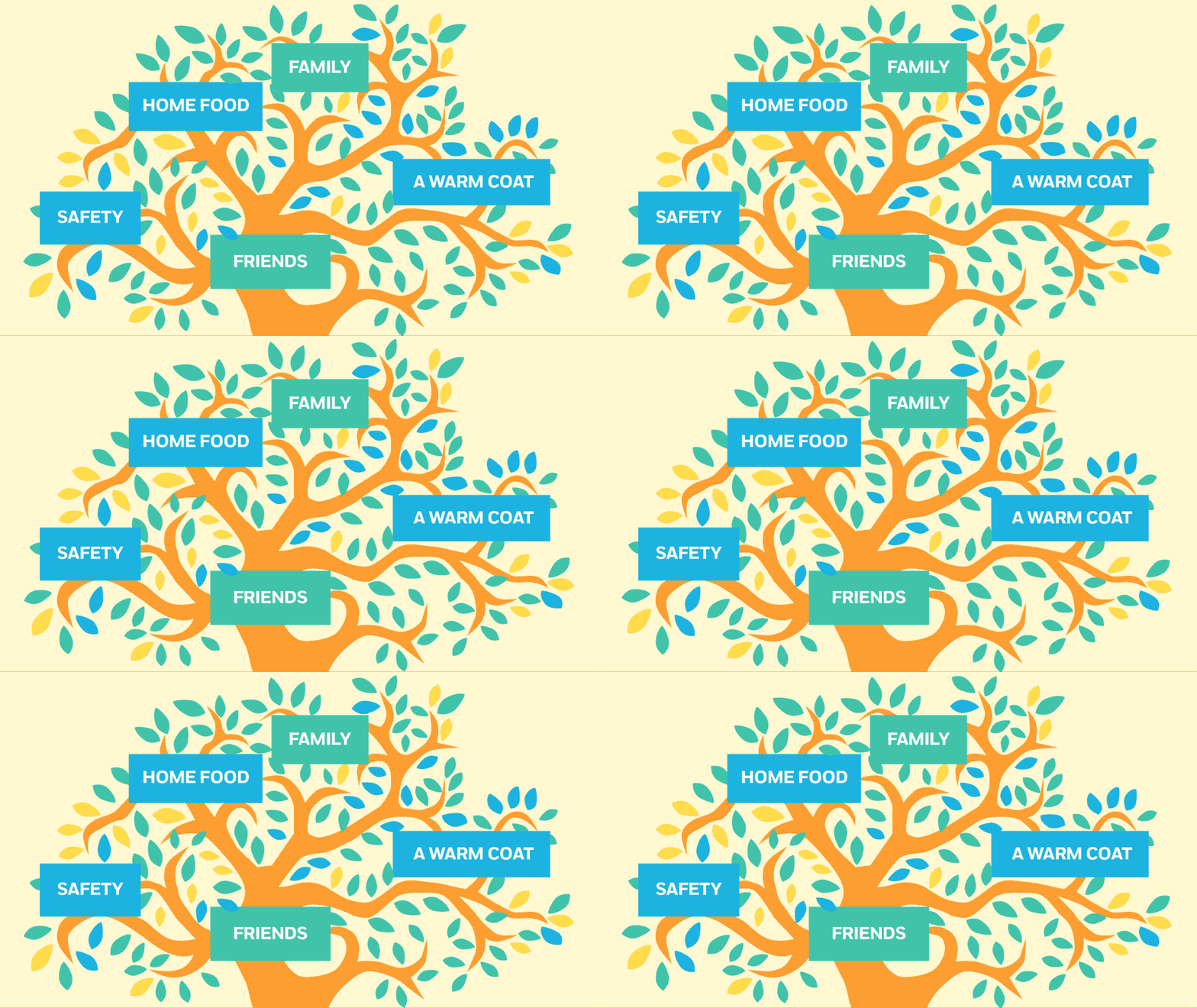
Use the Art Box to create a wish tree showing the things you wish for. Draw a picture of a tree, and write the things you want on the branches. You could also simply draw something you wish for and save it in your art box.
Living in the uk
Moving home
Moving to a new country can be difficult, especially when you've lost your home. You might miss your friends or family and it can be difficult not knowing what's happened to them.
It can help to think about ways to remember your family and make yourself feel at home:
- talk to an adult you trust about your family and what you miss
- share your culture and experiences with people you meet
- create a box, with drawings, photos and notes about things you want to remember, or to do in the future.
Coping without your family
It can be really difficult if you've lost contact with your family. Especially if you don't know what's happened to them.
The British Red Cross can help you get support with contacting your family.
If you've lost a family member, remember there's no right or wrong way to react. But you don't have to go through this alone. We're always here for you.
It can also help to:
- talk about what's happened with an adult you trust
- make a picture to show how you're feeling with the art box
- start a journal to express how you're feeling.
Going to school
Every child and young person in the UK has the right to get an education. This means that you can go to school or college as an asylum seeker, refugee and if you're asylum claim hasn't been accepted.
But sometimes when you first come to the UK, or if you're moving around a lot, it can take some time before you get a place in a school or college.
It can also be scary starting a new school in a new country. Some young people worry about feeling different or being bullied. Remember there are ways to get support and the teachers are there to help keep you safe and happy.
Making friends
Making friends when you're in a new school and country can feel scary. Talking to new people can be especially hard if you've lost friends before and have been moving around a lot.
But making friends and talking to new people can help you to feel better.
Some young people might be bullied when they go to school. And if you're being bullied because of your race or religion, we can help. Remember that you can also talk to a teacher. It's their job to support you and make sure that you're safe.
Celebrating difference
The world would be a very boring place if everyone looked the same, spoke the same and did the same things. Having different people around is a really positive thing.
Some people find new or different things scary. So the more they come to understand or hear positive things about a culture or religion, the better they might feel about it.
You could ask people questions about their beliefs and explain more about your faith, religion or values. This could be a way of learning about each other and about the things that make us who we are. Celebrating our differences can sometimes help us meet new people, make friends or stop bullying from happening.

Helping someone you know
There are lots of ways to support someone who has come to the UK as an asylum seeker. It can help to imagine what it would be like coming to a new country, and how you'd like people to treat you.
Here are some things you can do:
listen - letting someone know you're there for them can help them to feel cared for. It can also be an important way of reassuring a child refugee or asylum seeker who feels anxious about speaking English as a second language.
ask about their background - refugees coming to the UK can find it hard to fit in. Sharing stories about the differences between countries shows interest and will help you get to know each other
do things you both enjoy - this can help them take their mind off things. Things can feel unfamilar in a new country and it can help to show someone the different things they can do.
Get more support
This site is protected by reCAPTCHA and the Google Privacy Policy and Terms of Service apply.