
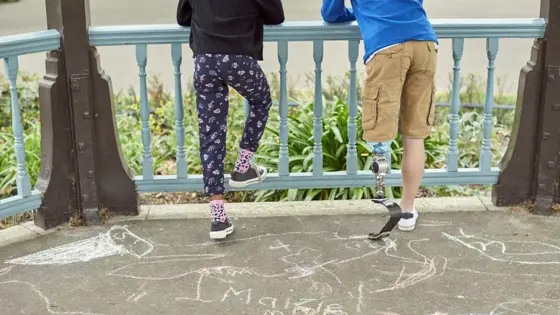
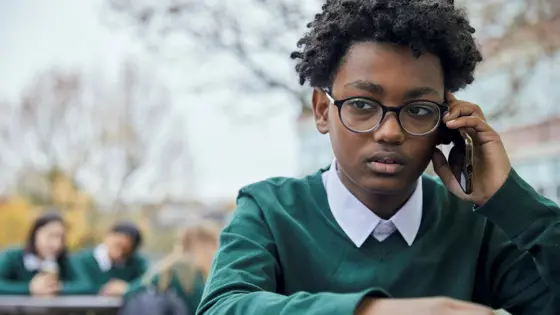
worried i'll be
treated
differently

Call 0800 1111
Living with a disability
If you have a disability, you might have challenges that other young people don’t. But that doesn’t mean you can’t do well in school. Or play sport. Or have sex. Knowing your rights can help you deal with challenges such as discrimination. It’s also good to know how to get any support you might need.
What is a disability?
A disability is anything that stops you being able to do day-to-day activities, and can include problems with sight, hearing, speech, memory or getting around.
Some disabilities – particularly dyslexia and other learning disabilities – may affect how you learn. If you know that you have a learning disability, it’s important that your school and your teachers also know about it. They can help you find ways of coping and also support you in your school work and revision.
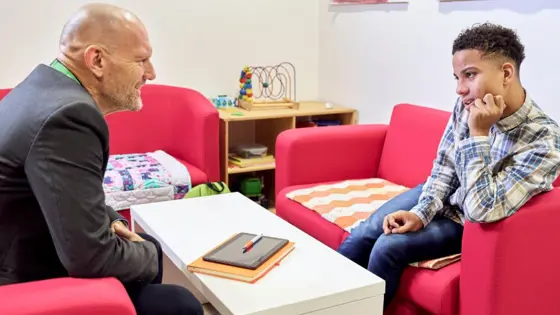
However you feel about your disability the Childline counsellors are always here to support you.
What causes a disability?
There are lots of reasons why someone might have a disability.
Some disabilities:
- can be the result of genetic disorders, which are passed on through families
- are the result of problems during pregnancy or birth
- are developed during someone’s life, like if they were involved in an accident, developed an illness or a mental health problem that comes and goes.
Remember, you can still:
- play sports and do activities
- try different hobbies and find new interests
- have sex and be in relationships
- have a career and other opportunities.
Knowing your rights
As a person with a learning difficulty, you may have challenges like people treating you differently. This is wrong and is against the law.
You have the same rights as everyone else and there are laws to make sure that your rights are protected. If you are being abused, you deserve to get support.
The Equality Act was put in place to make sure the rights of people with disabilities are looked after. It's all about rights about jobs, education and ways to get help.
You can also check out our page about discrimination, hate crime and equality.
Other places that can help:
- YoungSibs has support for people with a brother or sister who is disabled
- Whizz-Kidz can give you advice if you have a disability.
- Gov UK has more info about the Equality Act and what it covers.
Sex and disability
Having a disability doesn’t mean you can’t have sex. People who have a disability have the same feelings and needs as anyone else. And this includes wanting to have sex.
Sex is different for everyone, whether they have a disability or not. (But remember that the legal age of consent for sex is 16 years old.) If you’re thinking about having sex, it’s important to think about what feels right for you and to feel safe. You can also find out more about contraception and relationships.
There are different ways to have sex. And it’s usual for people to experiment and find out what works for them. If you have any worries about this, try talking to someone you trust or talk to your doctor.
Check out TheMix.org for info about sex when you're disabled.
Sport and disability
Lots of young people with a disability play all types of different sports. Many people find being active and playing sport is a great way to keep fit and build up confidence. Playing sport can also be a great way of making new friends.
Check out English Federation of Disability Sport’s events listings to find out about sporting events for disabled people all over the UK. Their website also has information about sport and disability aimed at people living in England. For more information about sport for people with a disability in the other UK nations, look at:
- Scottish Disability Sport (or phone 0131 317 1130)
- Disability Sport Wales (or phone 0845 846 0021)
- Disability Sports NI (or phone 028 9038 7062 or text phone 028 9038 7064)
6 British athletes with disabilities who won medals at the Paralympics in 2012
1. Sarah Storey (cyclist) – 4 gold
2. David Weir (wheelchair athlete) – 4 golds
3. Sophie Christiansen (equestrian) – 3 golds
4. Eleanor Simmonds (swimmer) – 2 golds, 1 silver, 1 bronze
5. Natasha Baker (equestrian) – 2 golds
6. Hannah Cockroft (wheelchair athlete) – 2 golds
Sports for young people with a disability
get more advice
This site is protected by reCAPTCHA and the Google Privacy Policy and Terms of Service apply.