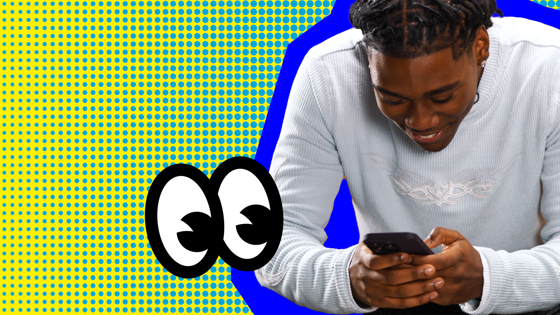

chatted
to this girl for ages
it turns out she
wasn't even real

Call 0800 1111
Trusting others online
Have you ever lied to someone online? Lots of us have. So knowing more about trusting others online is a great way to feel more in control. To help you, we’ve got advice on spotting fake profiles, understanding people’s online identities, and thinking about what you share with people.
Online identities
People don’t always show what their lives are really like online. Lots of people:
- Only show the best bits
- Stage their photos, even if they look spontaneous
- Use filters or edit their photos
- Exaggerate their personality or pretend to be a different version of themselves
And you might even do that yourself! It can be fun to play around with filters or change your persona online. But it’s a good idea to remember that if you’re creating an online persona, then others are likely doing the same.
This means that we can’t always trust everything we see online. Everyone hides certain things from social media, for a huge number of reasons. They might want to keep certain things private, or maybe social media is where they can escape and just have fun.
So next time you’re seeing someone or something on social media that might seem too good to be true, or that only feels like a highlight reel, think about whether you can really trust what you’re seeing. And whether the person posting it is telling the whole truth about their life online.
Can The Charvas work out who is REAL and who is FAKE?
We've invited WhyDee and Kay The Jeweller to take part in a challenge. We asked them to speak to three different girls online and guess who is real and who is fake.
How to spot fake profiles
Search for them
Most people have multiple social media profiles. So if you search for them, then they’ll most likely come up somewhere else. If searching their name shows different photos, or you don’t get any results, then you might want to be wary.
Or if their name and photos come up under a different account, especially if that account is verified or has way more followers, then they may be impersonating someone else.
Think about what they're sharing
It’s always a good idea to check things like the account’s username, bio, and feed to see if anything looks unusual. They might be posting things that seem too good to be true, or posts that look edited. Or the account might have only started posting recently, suggesting it’s been made for a specific purpose (such as a scam).
Another good place to look is their tagged photos. If no one has tagged them in any photos or something looks off, then that may be another red flag.
Looking at their followers or who they follow
If an account doesn’t have many followers, that might mean that they’ve set up a fake account. Or if they’ve got 1000s of followers for seemingly no reason, they might have bought them, or they may be bot accounts.
Most real accounts will follow their family, their friends, or public figures they’re interested in. If this isn’t obvious, then they might be a fake profile.
Get a second opinion
When things seem too good to be true or you already trust someone, it can make you want to believe things you wouldn’t normally believe. It’s a good idea to ask someone you trust for their opinion on the account.
Chatting to people you don't know
Whenever you’re talking to someone online, it’s a good idea to:
Set your own boundaries
Knowing your own boundaries means that you’re aware of what you’re comfortable with or not. It includes:
- What you’re willing to share about yourself
- How you feel about sending or receiving nudes
- What you want from speaking to someone online
It’s good to know your boundaries in any relationship, whether it’s with someone you don’t know or your closest friend. If someone is speaking to you in a certain way, or asking you to do something you don’t want to do, you can ask or tell them not to.
We’ve got advice on how to stand up for yourself if you need some help with setting boundaries.
Think about what you're sharing
You never need to share anything with anyone when you’re not sure if you want to. This includes personal information like your contact details, address, the name of your school, or photos of yourself.
You can’t always know what someone else will do with what you tell them, even if they’re telling you they won’t share it with anyone.
Know when to stop replying
You’re in control of when and if you reply to someone. You can stop replying to messages or ignore questions you don’t want to answer any time. Especially if speaking to someone isn’t feeling good anymore or they’re threatening you.
Block and report people
If someone won’t stop messaging you, you can always block and report them. Most apps and platforms have lots of tools to help you block people you don’t want to be contacted by.
It’s also a good idea to look out for these red flags that might suggest something’s not quite right:
- If they start flirting quickly, and what they’re saying feels quite intense.
- If they ask you for money or nudes early on in your conversations.
- If they try and get you to move to a more private platform, like WhatsApp.
- If they tell you to keep things between yourselves, or it feels like you can’t tell other people.
- If the conversation starts to feel controlling or threatening.
I want some help...
Knowing when it’s time to get help is part of staying in control. If something’s not feeling right, is unsafe, or you just need a second opinion then there are places to go. You can:
- Use Report Remove to take down photos or videos you think might get leaked online
- Tell someone you trust, like an adult or people at home
- Contact Childline by 1-2-1 chat, or on the phone.
"Sextortion" and scams
Anyone can be scammed online, it’s much easier for someone to do it than people think. It’s important to remember that even when something seems completely real, a profile could still be fake. You can also find out more about other online scams on our taking control of your online safety page.
What is "sextortion"?
“Sextortion” is a term that can be used a lot, especially online and in the media. You might also call it being blackmailed or getting scammed. It’s called sexually coerced extortion and it’s when someone demands money or some other kind of payment and they threaten to share sexual photos or videos if they don't get that payment. Being coerced means to be forced into doing something. This type of extortion has happened to lots of people but it’s never their fault. It’s against the law – it’s on the scammers, not you.
People use fake profiles to trick people into sending images. Others might create fake sexual images and use those to threaten someone. Sometimes, scammers have no images at all – but they pretend they do to scare people into doing what they say.
What to do if you're being threatened
If you’re being threatened, there are things you can do – we’re here to help.
- Importantly, don’t respond, and do not give any money or anything else you’re being asked for.
- Tell someone you trust what’s happening. Remember that you can always talk to us.
- Note down any details from the person threatening you, like their username, email, phone number, or any bank details.
- Keep screenshots of messages you’ve been sent.
- Make a report to CEOP about what’s happening.
- You can use Report Remove to take down any nude images from the internet and stop them being posted.
What can I do?
- Check your privacy settings on your profiles, and make sure you’re in control of who can contact you.
- If someone is messaging you and making you feel uncomfortable report and block them.
- Avoid sharing any photos or videos of yourself with people you’ve only met online.