Page Utilities
Change wallpaper
Help
Accessibility
Puberty is a series of changes that your body starts to go through in your early teens which helps you develop into a young woman. You start to produce hormones which will change your body and can also affect your emotions. It can be a difficult time getting used to everything.

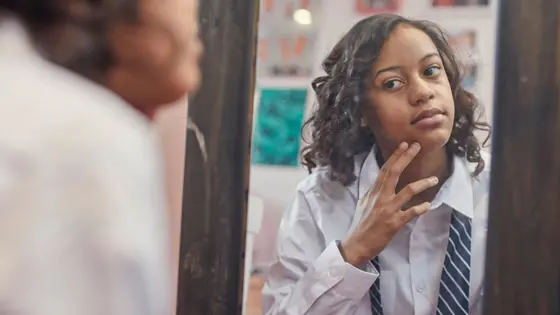
Girl looking in a mirror checking her skinWhen girls start puberty

For girls puberty usually happens between the ages of 10 and 16. Some girls can start puberty earlier and some later, everyone is different.

Puberty takes different lengths of time for everyone. For some girls it can take a couple of years for all the changes in puberty to happen, or for others it will take longer and be more like four years. This is completely normal and doesn't mean that there is anything wrong with you.


When boys start puberty

Boys usually start puberty between the ages of 12 and 18. Find out more about what happens to boys during puberty. 

Talking about puberty

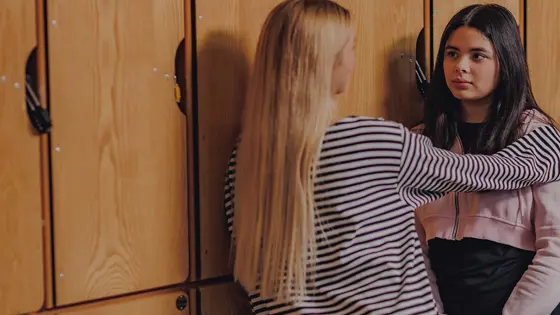
Sometimes you might have questions that you are too embarrassed to ask your teacher, parents or friends about. If you are worried or confused about anything it will help to talk about it.

If you can't talk to someone you know, you can call ChildLine on 0800 1111 or contact us online and we will be able to help you. You could also read the ChildLine message board about puberty for girls to see what other young girls are talking about.

What will happen during puberty

You will go through lots of changes during puberty - some of those changes are obvious to other people and some that only you will know about. Some of things that will happen to you are:

  • You will grow taller.
  • Your breasts and hips start to grow and your body will have more curves
  • You will grow hair under your arms and between your legs
  • The hair on your legs might get darker and some girls grow hair on their upper lip too
  • You might get spots
  • You might sweat more
  • Your periods will start and you could experience premenstrual tension (PMT) in the week or days just before your period
  • You might start feeling odd and moody during puberty - this is because your hormones are developing
  • Your vagina changes and you will start to produce a clear or white liquid or discharge - this is normal and is how your vagina keeps clean and healthy. If the discharge is yellow or smells, or your vagina feels itchy, you should see your doctor as you might have an infection. If you notice more discharge, it might be a sign that your period is going to start soon.

  • Will I need to wear deodorant or antiperspirant?

    As you go through puberty you might find that you sweat more. This is because your sweat glands change and produce more sweat to help control your body's temperature.  It's important to wash regularly and wear clean clothes so that you don't smell but you can also wear deodorant or antiperspirant if you are worried about smelling.

  • What are periods?

    Your periods are a sign that your body is ready to have a baby.  Each month one of your ovaries (you have two) releases an egg. The egg travels down the fallopian tubes and into your womb. The lining of your womb temporarily thickens while this is happening, and if the egg is fertilised by a man's sperm, it will stick in this soft lining and grow.  If the egg is not fertilised, then the lining of the womb breaks down and passes out of your body through your vagina as a small amount of blood, and this is called a period.

  • How often will I have a period?

    You will normally get your period once a month and the average time between the start of one period and the start of another is 28 days. This is called a menstrual cycle.  This is different for everyone, so don't worry if the length of your cycle is shorter or longer than this.

  • How long does a period last?

    A period lasts a few days and the average length is about five days. Bleeding is usually heaviest on the first couple of days of your period.

  • How much blood will I lose during my period?

    The amount of blood you lose during your period is about five to 12 teaspoons full, although it might seem like a lot more.  If you find that you have very heavy periods, you should talk to your doctor as you can take medication to stop this from happening.

  • When will my period start?

    Your period will start when your body is ready. Girls usually start their periods around 12 years old, but this is only an average age.  Some girls start their periods much younger and some start when they are older. If you haven't started your period by the time you are 16 years old, you should go to the doctor or nurse for a check-up.

  • What is premenstrual tension (PMT)?

    Premenstrual tension or PMT is the name for how some women feel a few days before their period. Around 90 percent of women and girls get PMT and the symptoms can be mild or severe. The symptoms might include:

    • Mood swings and irritability
    • Unexplained crying/sadness
    • Poor concentration
    • Tiredness
    • Breast tenderness
    • Abdominal swelling/bloating
    • Cramping in the abdominal area
    • Temporary weight gain
    • Headache

    If you find that PMT is making your life very difficult and you experience any of the symptoms very badly, you should talk to your doctor.  There are some medical conditions that can cause these symptoms to be very bad, and so it’s worth getting check out. You may be able to get some help to deal with them from your doctor.

  • What do I use for my periods?

    When you have your period you will need to use something to soak up the blood. There are several different products that you can use and these are the most common:

    Sanitary towels or pads are strips of padding which have a sticky side that you can attach to your knickers to keep them in place.  They soak up the blood and keep it contained. There are lots of different sizes of sanitary towels, so you can change them depending on how heavy or light your period is.

    Tampons are small cylinders of cotton wool which have a string at one end.  You push these into your vagina and they soak up the blood before it comes out of your body. You use the string to pull it out when you need to change it.  Some tampons have applicators which can make it easier to insert them into your vagina.

    Tampons can be hard to get the hang of, so you might want to get used to having your period before you try using them. You shouldn't insert a tampon into your vagina when you are not on your period. If you are not bleeding, a dry tampon can damage you inside and might lead to an infection.

    Panty liners are smaller and thinner versions of sanitary towels and are used on days when your period is very light.  You can also use these if you have a lot of discharge in-between your periods.

    'Menstrual cups' are small rubber or silicone cups which can be put inside the vagina to catch the blood. The muscles of the vagina keep them in place so they don't fall out. They are then emptied, washed and reused.

  • How often should I change my sanitary towel/tampon?

    Sanitary towels, pads or tampons should be changed every few hours and more if you are bleeding heavily.  Tampons should never be left inside your vagina longer than eight hours.  This can cause something called Toxic Shock Syndrome which is very serious. Some girls prefer to use sanitary towels during the night rather than a tampon.

    It's important to keep yourself clean during your period. Make sure you wash regularly and change your sanitary towels or tampons often. This will help stop you getting any infections.

  • What if my period is late?

    When you first start your periods, you might not be very regular, so you could have a period and then not have another for a few months.  This is normal and not something to worry about. If there is a chance you could be pregnant, you could take a pregnancy test or speak to your doctor or family planning adviser about it. Even if you don't think you are pregnant, if you haven't had a period for quite a while and are worried, you can always talk to your doctor about it and have a check up. 

  • When should I start wearing a bra?

    You can start wearing a bra whenever you want to.  If you feel that you would be more comfortable wearing one, then it's the right time for you. It's important to get fitted for a bra in a department store or specialist bra shop so that you make sure you are wearing the right size.

  • What size should my breasts be?

    Breasts come in all shapes and sizes and they are all normal! Bodies grow at different rates during puberty so although it's hard, try not to compare yourself with anyone else. The size and shape of your breasts will continue to change throughout your life.  Lots of things can affect their size and shape like losing or gaining weight, pregnancy and breastfeeding.

  • I'm having lots of sexual thoughts and feelings, is this normal?

    It's normal to have sexual thoughts and feelings, especially during puberty when your body is changing. It can be confusing and strange at first but it isn't unusual. Your feelings should calm down after while when your body adjusts to the changes. Read more on our sex advice page.

  • What is masturbation?

    Masturbation is when you touch your body and your genitals and make yourself orgasm or come.  Both girls and boys masturbate and it's completely normal. It's a way of discovering your body and how it makes you feel and what kind of things make you feel good. Some people might say that it's wrong or that you shouldn't masturbate, but it's a normal part of life and not something to be ashamed of.

Other sites that can help:

Find out more about what happens to your body during puberty and better understanding your sexual health.
Brook - girls young women

Puberty for girls message board

Find out what other young people are saying about puberty on the ChildLine message board. You can read what others have said or sign up to post your own message.

Message boards

How did this help?

How did this information about puberty help you?


Puberty for girls 

Accessibility

We want to make sure everyone can access the information provided on this site

We've put together a few tips and help for you. Please send us a message if you can't find what you're looking for. Or you have a suggestion of something we could include.

Using the keyboard instead of the mouse.
As well as using the tab key to navigate through the screen, the ChildLine website has special access keys:

Alt+S = skip navigation
Alt+1 = home
Alt+0 = accessibility information.

Is the text size too large or too small?
You can change your text settings through your browser options:

In Internet Explorer, go to View > Text size and select your desired text size setting (eg, larger, smaller).

In Firefox, go to View > Text size and increase/decrease using Ctrl and + or -

If you have a scroll wheel on your mouse, you can hold down Ctrl and scroll back or forth to increase or decrease the font size in both IE and Firefox.

Changing your computer screen settings
To change the size of the image shown on your screen on a PC running Windows 95 and upwards, go to Start > Settings > Control Panel > Display > Settings and change the desktop area by using the sliding bar.

On an Apple Mac, you can use the Monitor & Sound Control Panel to change the resolution.

Having difficulty with your keyboard or mouse?
You can fine-tune your mouse and keyboard settings under Start > Settings > Control Panel > Accessibility in Windows 95/98/NT/2000 and XP.

Skipping navigation for talking browsers and screen readers
For speech browsers, you can press Alt and S followed by Enter to skip navigation on our pages.

The site is W3C level A compliant.


Help

This page contains help and advice.  If you need to contact ChildLine please go to the Talk to us page

Search for something on the website
To search for something on the website, type what you want to find in the search box on the navigation of the site.